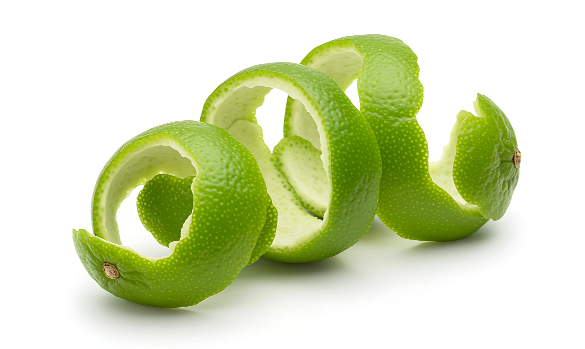
Citrus fiber is a plant-based, vegan and functional ingredient, obtained from the upcycling of partially depectinised citrus peels, also known as “pastazzo”, a byproduct of the pectin industry. The result is a clean label solution, commercialised under the VITACEL® brand name. Citrus fiber is declared as an ingredient, according to Regulation (EC) N. 1333/2008, and, thus, out of the scope of the food additive list (E-number free).
With its impressive water-holding capacity and exceptional texturising, emulsification and stabilisation properties, citrus fiber empowers food and beverage manufacturers to enhance their culinary creations. Other applications include pharma, nutraceuticals and cosmetics. Our product lineup includes VITACEL® FA and VITACEL® FAS, two solutions with identical characteristics that vary only in particle size.
JRS Silvateam uses the leftover of the pectin production as raw material to produce a multifunctional dietary fiber.
Historically the depectinised citrus peels ended up as perishable animal feedstuff or as biomass for green energy production. Embracing the principles of circular economy, after 3 years of lab and industrial research, we have been able to reuse up to 90% of the spent peels by turning them into a natural, high value added ingredient containing a minimum of 85% of fibers, both insoluble (cellulose and hemicellulose) and soluble (pectin), as well as proteins and salts.
This is a perfect example of eco-conscious business model: what was once regarded as a mere byproduct has now become a useful resource that can be reintroduced within the production cycle, fostering sustainability and resource efficiency
How does Pectin work
VITACEL® shows one of the highest water binding capacity among plant-based fibers, capable of retaining as much as 25g of water per 1g of fiber. This capacity reflects the ability of citrus fiber to secure water while undergoing mechanical forces, allowing the microfibrils to swell and, therefore, fostering the absorption of water.
Due to its chemical structure, VITACEL® allows water to be trapped into the cellulose through the formation of hydrogen bonds between the hydroxyl groups of the glycosidic rings and water itself. Therefore, it is important to activate the citrus fiber by using high shearing forces, such as a high-speed mixer or homogeniser, ensuring optimal functionality in various applications.
Key benefits of pectin
Gelling and thickening agent
Viscosity and mouthfeel improver
Syneresis control
Suspension enhancer
Protein protection
Fat replacer and sugar reduction agent
Cleaner label option
Source of dietary fiber
How is Pectin made
Pectin exhibits its functional properties when it is correctly dissolved in water and stored in a cool, dry environment. In fact, pectin must be completely dissolved to ensure full effectiveness and to avoid heterogeneous gel formation.
Any lumps formed during the preparation of the solution lead to a loss of gel strength because pectin lumps are not active. To produce a good pectin solution it is recommended to pre-blend the pectin with sugar in the minimum ratio of 1:3 and dissolve it hot water (85 – 90°C / 185 – 195°F), at a soluble solids content below 20% using a suitable high speed stirrer.