Sustainability

Commitment and respect for people and the environment

A goal-setting mindset has always been a hallmark of those who seek personal growth and development. Get a better grade in school, reduce the duration of a run, climb that peak, devote more time to loved ones, take care of the garden or engage in volunteer work. We all do it in one way or another.

JRS Silvateam Ingredients also likes to set goals and strives to achieve them. It does this by devising new products, reaching new markets, and improving its economic and financial performance. It achieves this through a structured approach of outlining a five-year plan comprising investments, market expansion and R&D targets, and key technical and economic performance indicators.

These are goals that we define as SMART as those we assign in our reward system:

S

stands for specific, well-defined, clear

M

for measurable with indices and numbers

A

for ambitious but achievable

R

for related to the characteristics of our business

T

for temporally defined with evaluated and self-imposed deadlines
This approach stems from JRS Silvateam Ingredients’s belief that consistent growth can be achieved by combining development, efficiency, environmental impact reduction, involvement and organisation.

An eco-conscious approach to productivity increase

JRS Silvateam commitment towards a greener and less impacting production processes is driven by 3 main pillars:

Process water and wastes:
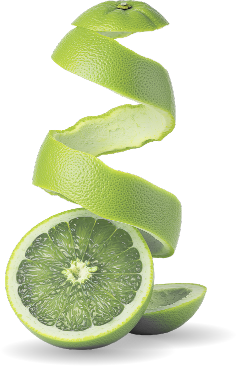
process water is reused through multi-step countercurrent washing. Moreover, the destination of spent citrus peels, instead of usage in animal nutrition, is diverted to the in-house production process for citrus fiber. This allows to save on transportation costs and CO2 emissions.

Emissions and energy optimisation:
high-efficiency cogeneration systems produce electrical energy, steam, and hot/ cold water with minimal emissions. JRS Silvateam Ingredients’ plants have integrated thermal flows for heat/cold exchange.

Electrical and thermal energy:
local renewable plants supply 14MWh of electrical energy from biomass / solar panels and bio-methane from anaerobic biomass processing.

These targets are to be achieved by 2025, once the 3rd pectin production line will be fully running.

SAVING PER KG OF PRODUCT
(PURE PECTIN AND FIBER)

-47,4%

Electrical energy

-24,1%

Thermal energy

-64%

Process water

-34,2%

CO2 emissions

-95,6%

Solid waste

-55,6%

Wastewater

Our social development agenda in Peru

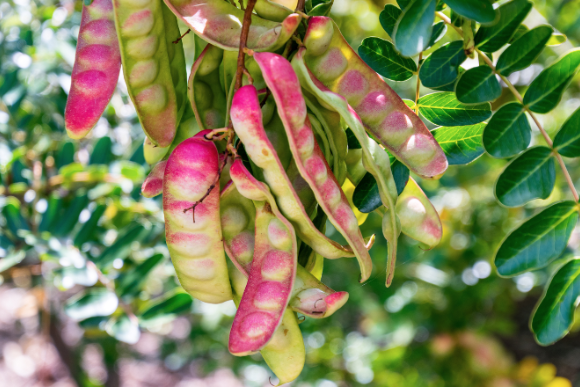
In the remote Peruvian Andes, the harvesting of tara pods (Caesalpinia spinosa) has transformed local subsistence farming into a stable source of income. Driven by new plantations and a factory in Chilca, this business distributes nearly 50% of its income to over 10,000 local families through fair, multi-year contracts and agricultural training. Beyond fair pay, the initiative supports communities with healthcare, administrative help, low-interest loans, and sports facilities, while strictly guaranteeing safe working conditions, transparent contracts, and a zero-tolerance policy for child labor.

Direct and naturally sustainable supply

In Peru, Caesalpinia spinosa—the source of tara gum—is harvested from wild trees and three proprietary plantations spanning 620 hectares in Huánuco and the Ica desert. The Huánuco site (2,500m elevation) features 170,000 plants producing certified organic tara, while the Ica desert hosts 350,000 plants fed by underground aquifers and micro-irrigation to combat water scarcity and cut emissions. Backed by a decade of research into high-yield cultivars, semi-mechanized harvesting, and local bee pollination, this supply chain ensures high-efficiency, sustainable production.

Want to explore the potential of plant-based ingredients?

Need help formulating your recipe?

Challenge our team! We are here to support you.